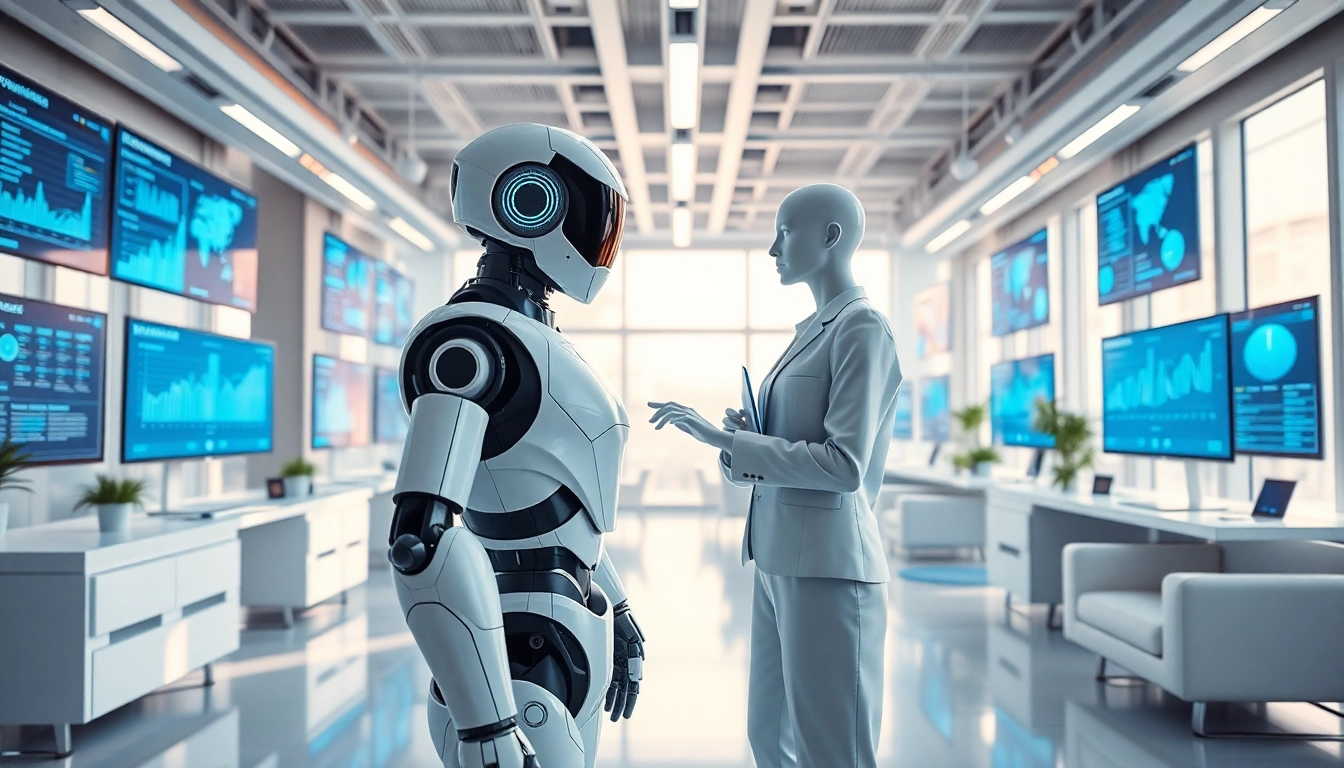
Understanding Ai Agents
Definition of Ai Agents
At its core, an Ai agents serves as an advanced software system capable of carrying out tasks autonomously by autonomously perceiving its environment and making decisions based on it. These agents interact intelligently with their surroundings and are designed to achieve specific goals, often improving their efficiency over time through learning. They rely on algorithms and data inputs that allow them to function independently, making them essential in various automation-driven applications.
Core Characteristics of Ai Agents
Ai agents possess several defining traits that set them apart from traditional software systems:
- Autonomy: Ai agents operate independently of human intervention, processing information and acting on it in real-time.
- Adaptability: They are equipped with machine learning capabilities, allowing them to learn from experience and adapt to changes in their environment.
- Goal-Oriented: Every Ai agent is designed with specific objectives, which drives its actions and decisions.
- Interactivity: They can engage with users and other systems, providing feedback and receiving input that aids in decision-making processes.
- Perception: Ai agents can perceive their environment through data inputs from sensors, cameras, or other monitoring systems, enhancing their operational scope.
The Role of Machine Learning in Ai Agents
Machine learning serves as the backbone of Ai agents, enabling them to enhance their performance over time. By analyzing vast datasets, Ai agents can identify patterns and make predictive analyses that refine their tasks. This capability allows Ai agents to evolve and improve their decision-making processes, leading to increased productivity and effectiveness in various applications. For instance, in customer service, machine learning allows Ai agents to provide increasingly accurate and personalized support based on past interactions with customers.
Types of Ai Agents
Reactive Ai Agents
Reactive Ai agents operate based on predefined rules and respond to specific stimuli in their environment. They do not possess memory or the ability to use past experiences to inform current decisions. Instead, they act solely based on real-time inputs. An example is a spam filter that scans emails and categorizes them as spam or not based solely on its programming. While effective, their lack of adaptability limits their functionality.
Deliberative Ai Agents
These Ai agents possess a more complex architecture that enables them to plan, reason, and understand their environment comprehensively. They can maintain a model of the world and use this information to make informed decisions. For example, a robot vacuum can map out the layout of a home, plan a cleaning route, and adapt its path if obstacles are detected. Their deliberative nature allows for dynamic adaptability, making them more suited for complex tasks.
Hybrid Ai Agents
Hybrid Ai agents combine characteristics from both reactive and deliberative agents, enabling them to function effectively in various scenarios. They can react to immediate challenges and independently plan and execute tasks. The ability to utilize both approaches allows hybrid Ai agents to optimize performance by choosing the best strategy for a given circumstance. For instance, an intelligent personal assistant can react to voice commands while scheduling tasks based on context and user patterns.
How Ai Agents Operate
Task Automation and Workflow Design
One of the defining features of Ai agents is their ability to automate tasks and streamline workflows. By using machine learning to recognize task patterns, Ai agents can handle repetitive jobs, facilitate data entry, or manage inventory supply without human involvement. This not only increases efficiency but also frees humans to focus on more strategic activities, such as decision-making or creative endeavors. In industries such as manufacturing, Ai agents significantly reduce operational costs and time needed for processes such as quality assurance.
Interaction Models of Ai Agents
Interaction models dictate how Ai agents communicate with users and systems. Common models include:
- Command-Based Interaction: Users provide specific commands, and the Ai agent executes tasks. This model is common in virtual assistants.
- Conversational Interaction: Using natural language processing, Ai agents can engage in dialogue with users, allowing for a more natural and intuitive experience.
- Collaborative Interaction: Ai agents can work alongside humans, learning from their behaviors and preferences to improve future engagements.
Performance Enhancement Through Learning
Performance enhancement in Ai agents occurs through continuous learning and adaptation. As they gather more data, they refine their algorithms, which enables them to deal with complex scenarios more effectively. Techniques such as reinforcement learning allow Ai agents to receive feedback based on their actions, encouraging them to select more successful strategies and discouraging ineffective ones. This feedback loop helps improve decision-making accuracy over time and contributes to overall operational efficiency.
Applications of Ai Agents in Various Industries
Ai Agents in Healthcare
In healthcare, Ai agents play a pivotal role in improving patient outcomes and enhancing operational efficiency. For instance, they can analyze patient records to provide personalized treatment recommendations, assist with diagnostics by comparing symptoms with vast databases, and even help with scheduling and managing patient appointments. By automating routine tasks, healthcare professionals can devote more time to patient care, which leads to better service and satisfaction.
Ai Agents in Finance
The financial sector has embraced Ai agents to enhance decision-making and streamline operations. These agents can analyze market data, predict trends, and facilitate algorithmic trading, which minimizes human error and speeds up transaction processes. Additionally, Ai agents are employed in risk management, fraud detection, and compliance monitoring, significantly reducing the time and resources needed for financial institutions to operate efficiently while ensuring regulatory adherence.
Ai Agents in Customer Service
Customer service has experienced a transformation through the integration of Ai agents. Chatbots and virtual assistants are now commonplace, handling customer inquiries, complaints, and information requests. By using Ai agents in customer service, organizations can provide 24/7 support without human agents being present. They not only streamline handling processes but also analyze customer interactions to improve service quality through feedback and data analysis.
Future Trends and Developments in Ai Agents
Emerging Technologies Complementing Ai Agents
The development of Ai agents is primarily driven by advancements in complementary technologies such as big data, cloud computing, and the Internet of Things (IoT). Big data analytics allows Ai agents to process massive amounts of information, leading to better decision-making. Cloud computing offers the scalability and computing power needed for complex Ai operations, while IoT enhances the interaction range of Ai agents through interconnected devices. Together, they are paving the way for more intelligent, versatile Ai applications.
Ethical Considerations for Ai Agents
As Ai agents become more prevalent, ethical considerations surrounding their deployment are surfacing. Issues like data privacy, algorithmic bias, and the impact on employment raise concerns. Developers and organizations must ensure that Ai agents adhere to ethical standards to prevent misuse and promote fairness in decision-making processes. Implementing transparent algorithms that can be audited is a step towards developing responsible Ai agents that can be trusted by users.
Predicting the Evolution of Ai Agents
The evolution of Ai agents is expected to be rapid and significant in the coming years. Advanced functionalities, including emotion recognition, enhanced natural language processing, and deeper integration into everyday tasks, are likely. As they become more capable, their applications will expand beyond specialized tasks to encompass wider industries and functions. We can anticipate a future where Ai agents act as integral partners in both professional and personal realms, further enhancing productivity and collaboration.
FAQs
What do Ai agents do?
Ai agents autonomously perform tasks and make decisions, enhancing user productivity by managing workflows.
How are Ai agents different from traditional software?
Unlike traditional software that follows pre-set protocols, Ai agents adapt and learn from interactions to improve functionality.
Can Ai agents communicate with humans?
Yes, Ai agents employ natural language processing to understand and engage in conversation with users effectively.
What industries are benefiting from Ai agents?
Ai agents are leveraged across various sectors, including healthcare, finance, retail, and customer service to optimize operations.
What does the future hold for Ai agents?
As technology advances, Ai agents are expected to integrate deeper into daily processes, enhancing collaboration and efficiency.