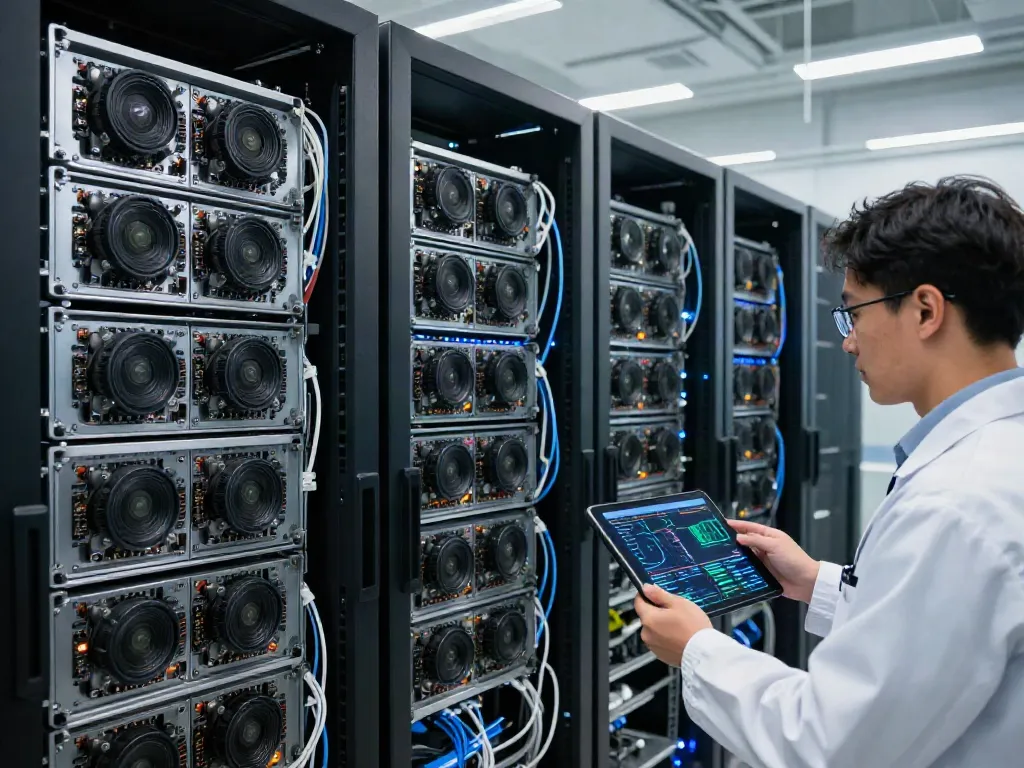
Understanding GPU Computing in AI Infrastructure
As artificial intelligence continues to evolve, the importance of GPU computing in AI infrastructure cannot be overstated. Graphics Processing Units (GPUs) have become essential for executing highly parallel tasks, which are integral to modern AI applications. Their ability to process large amounts of data simultaneously makes them particularly suited for AI workloads, which require rapid computations and high efficiency.
What is GPU Computing?
GPU computing refers to the use of GPUs to perform computational tasks that were traditionally handled by the CPU. This paradigm shift allows for a more efficient processing of algorithms that can leverage the massively parallel architecture of GPUs. By distributing tasks across thousands of tiny processing units, GPU computing accelerates the execution of complex calculations, making it an ideal solution for machine learning and deep learning applications.
The Role of GPUs in AI Workloads
In AI workloads, GPUs play a crucial role in training and inference phases. During the training of AI models, large datasets are processed iteratively, requiring significant computational power. GPUs can handle this parallel processing much more efficiently than CPUs, drastically reducing training times. Similarly, during inference, where the trained model makes predictions, GPUs enable rapid data processing, essential for real-time applications like autonomous driving or image recognition.
Advantages of GPU Over CPU in AI Applications
Several advantages make GPUs more suitable for AI applications compared to traditional CPUs:
- Parallel Processing: GPUs can execute thousands of threads simultaneously, allowing them to handle multiple data points at once.
- Speed: Tasks that would take hours on a CPU can often be completed in a fraction of the time with a GPU.
- Efficiency: GPUs are designed for high throughput and can manage power more effectively during intensive computation tasks.
- Specialized Libraries: Several well-optimized libraries, such as CUDA and cuDNN, further enhance the performance of GPU computing for AI applications.
Participating in the AI Token Economy
The AI Token Economy is a novel approach to quantify and reward participation in AI infrastructures, primarily driven by the energy and computing resources provided by various stakeholders. Understanding how these systems work is vital for organizations looking to leverage AI technologies effectively.
How AI Infrastructure Power Plans Work
AI Infrastructure Power Plans allow users to contribute to the energy and computational capacity needed by AI factories. Participants can choose different plans based on their capacity to support GPU workloads, thus receiving rewards proportional to their contributions. These plans are structured around the idea of tokenized AI services, where participants earn tokens based on the electricity and computational power they contribute to the system.
Your Contribution to the AI Token Economy
In the AI Token Economy, every participant has a role. By activating a power plan, individuals can help sustain the GPU infrastructure that underpins AI services. This contribution is not just financial; it also represents a commitment to fostering the growth of AI technologies through efficient energy use.
Reward Mechanisms in GPU Support
Rewards in the AI Token Economy are calculated based on several factors, including the amount of electricity supported by the participant's plan and the corresponding computational workload executed. These rewards can fluctuate based on the overall operational performance of the AI factories, ensuring that participants are compensated fairly for their contributions.
Building a Scalable AI Infrastructure
Creating a scalable AI infrastructure requires careful planning and consideration of several key factors. As the demand for AI services grows, so too must the underlying infrastructure that supports it.
Requirements for Effective GPU Computing
For GPU computing to be effective, several requirements must be met:
- Robust Power Supply: Reliable electricity is necessary to power GPU clusters effectively and consistently.
- Cooling Systems: High-density GPU computing generates significant heat, requiring effective cooling solutions to maintain operational efficiency.
- Data Management: Efficient data handling systems are critical to ensure that GPUs can access and process the required datasets without bottlenecks.
Key Components of Scalable AI Systems
To scale effectively, AI systems must incorporate components that can handle increased workloads, such as:
- Distributed Computing: Leveraging multiple GPU units across different locations or cloud environments can significantly enhance performance.
- Dynamic Resource Allocation: Systems that can allocate resources based on demand help optimize performance and cost-effectiveness.
- Intelligent Monitoring: Keeping track of system performance and identifying bottlenecks in real-time is essential for maintaining scalability.
Future Trends in AI and GPU Utilization
As technology advances, we can expect several trends in AI and GPU utilization:
- Increased Use of Edge Computing: Processing data closer to where it is generated will become more common, necessitating smaller, power-efficient GPUs.
- AI Model Optimization: Continued focus on optimizing AI models to reduce computational load while maintaining performance will drive advancements in GPU technology.
- Integration of Quantum Computing: Future developments may see GPUs working alongside quantum computing resources to tackle increasingly complex problems.
Maximizing Efficiency in AI Factories
To ensure efficiency within AI factories, careful planning and strategic resource management are crucial. AI operations must adapt to workload demands while remaining cost-effective and power-efficient.
Workload-Based Power Allocation Strategies
Implementing workload-based power allocation strategies can enhance the efficiency of AI factories. This approach involves allocating power dynamically based on real-time workload requirements, ensuring that GPU resources are utilized effectively without excess energy waste.
Measuring AI Workload Performance
Performance measurement in AI workloads is essential for ensuring operational efficiency. Metrics such as processing speed, accuracy, and resource utilization can provide insights into the effectiveness of GPU resources and inform future improvements.
Best Practices for GPU Resource Management
Effective GPU resource management involves several best practices:
- Regular Monitoring: Tracking GPU performance and workload distribution helps identify areas for improvement.
- Load Balancing: Distributing workloads evenly across GPUs prevents overutilization of specific units while others remain idle.
- Strategic Upgrading: Keeping GPU hardware updated ensures that factories can take advantage of advancements in technology.
FAQs about GPU Computing and AI Infrastructure
What are the primary benefits of GPU computing?
The primary benefits of GPU computing include speed, efficiency, and the ability to handle parallel processing, making it ideal for AI applications that require rapid computations.
How can businesses participate in the AI Token Economy?
Businesses can participate by choosing AI Infrastructure Power Plans that align with their computational needs and supporting GPU workloads through their contributions.
What factors influence GPU performance in AI?
GPU performance in AI is influenced by several factors, including hardware specifications, power supply, heat management, and the efficiency of the algorithms being executed.
What are common challenges with GPU computing?
Common challenges include managing heat generation, ensuring a reliable power supply, and efficiently utilizing GPU resources to avoid bottlenecks.
How is electricity utilized in AI factory operations?
Electricity powers the GPU infrastructure that drives AI workloads and services, making it essential for the functioning of AI factories.