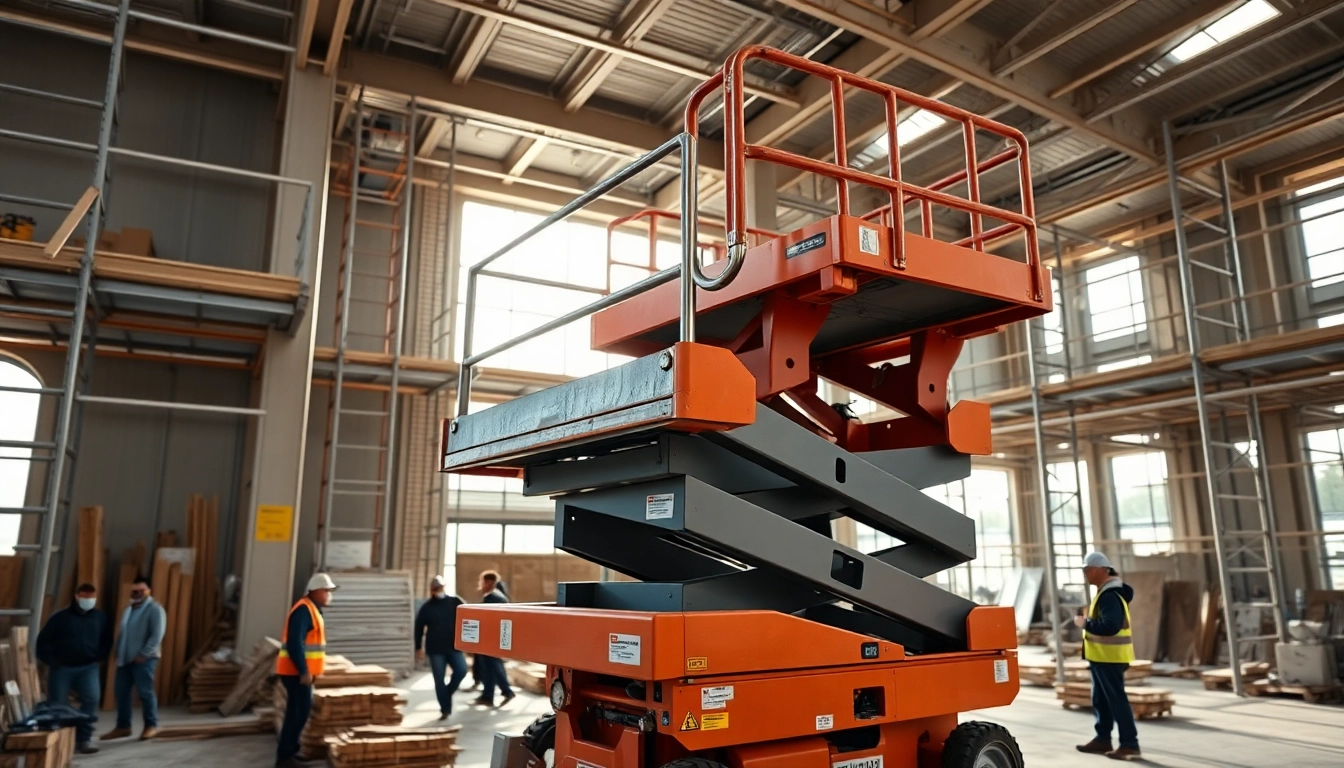
Understanding the Scissor Lift
What is a Scissor Lift?
A scissor lift is an aerial work platform designed to elevate both personnel and materials to heights that would otherwise be inaccessible without scaffolding or ladders. The lift operates through a unique mechanism where crisscrossed beams expand and contract, resembling the motion of scissors, hence the name. This mechanical advantage allows for stability and safety at various height levels, making it invaluable in various industries, particularly in construction, maintenance, and warehousing.
How Does a Scissor Lift Work?
The operation of a scissor lift is relatively straightforward. Power mechanisms, such as hydraulic systems, electric motors, or pneumatic systems, drive the lift. Once the operator activates the controls, these mechanisms cause the crisscrossed beams to extend vertically, raising the platform. Users can typically control lift speed, height, and stability, enabling precise positioning for tasks. The majority of modern scissor lifts come equipped with built-in safety features that ensure optimal usage, reducing the risk of accidents on the job site.
Types of Scissor Lifts Available
There are various types of scissor lifts designed to meet different operational needs:
- Electric Scissor Lifts: Ideal for indoor use due to their compact size and lack of emissions, making them perfect for warehouses and construction projects with tight spaces.
- Rough Terrain Scissor Lifts: These lifts are designed for outdoor use on uneven surfaces, equipped with enhanced traction and stability features, making them suitable for construction sites.
- Stock Pickers: Specialized scissor lifts that allow operators to easily access high shelves in warehouses, combining the features of a lift and a platform.
- Low-Level Access Scissor Lifts: Perfect for working at lower heights, these models provide a safer and more efficient way to access low-lying tasks.
- High-Capacity Scissor Lifts: These lifts can handle heavier loads, ideal for industrial applications that require lifting substantial materials or equipment.
Benefits of Using a Scissor Lift
Increased Safety and Stability
One of the key advantages of using a scissor lift is the enhanced safety it provides. With a stable base and a platform that can accommodate multiple workers and equipment, the risk of falls and accidents is significantly reduced compared to using ladders or scaffolding. Additionally, many scissor lifts incorporate safety features like guardrails, emergency stop buttons, and anti-slip surfaces, ensuring a secure working environment.
Cost-Effectiveness for Projects
Utilizing a scissor lift can be a cost-effective solution for many projects. The ability to quickly access elevated areas without extensive setup time can reduce labor costs and project duration. Renting a scissor lift instead of purchasing one can also save capital for companies that only need the equipment for a limited time.
Versatility for Various Tasks
Scissor lifts are versatile tools suitable for a wide range of tasks, from construction and maintenance to event setup and warehouse inventory management. Their ability to navigate through narrow aisles or fit in confined spaces makes them invaluable for various industries, enhancing productivity and efficiency. Different models can be used for specific tasks, allowing tailored solutions based on project requirements.
Choosing the Right Scissor Lift
Assessing Your Project Needs
Before selecting a scissor lift, it's essential to assess the specific needs of your project. Consider the height requirements, the working environment (indoor versus outdoor), and the types of loads that will be lifted. Understanding the project's parameters will help determine the specifications needed in a scissor lift, ensuring efficient and safe operation.
Specifications to Consider
When choosing a scissor lift, pay attention to the following specifications:
- Maximum Lift Height: Choose a model that can safely reach the required elevation for your tasks.
- Platform Capacity: Ensure the scissor lift can safely handle the expected weight, including personnel, tools, and materials.
- Dimension and Weight: Consider the physical dimensions and weight of the lift when navigating through tight spaces.
- Power Source: Decide between electric and hybrid options based on your project location and power availability.
- Terrain Capability: For outdoor use, verify whether the lift is suited for rough terrain or more complex environments.
Rental vs. Purchase Options
Deciding between renting or purchasing a scissor lift hinges on several factors, such as project frequency and budget. Renting is ideal for short-term projects or infrequent needs, providing access to the latest models without maintenance costs. On the other hand, purchasing is a better long-term investment for companies requiring regular access to a scissor lift.
Operating a Scissor Lift Safely
Essential Safety Procedures
Safety should always be a priority when operating a scissor lift. To ensure a secure environment, operators should:
- Conduct pre-operation checks to inspect safety features and equipment.
- Read and understand the manufacturer's operating guidelines.
- Wear appropriate personal protective equipment (PPE) such as hard hats, harnesses, and safety shoes.
- Follow safe operating practices, including maintaining a stable base and avoiding sudden movements.
Common Mistakes to Avoid
While operating a scissor lift, certain mistakes can lead to dangerous situations. Operators should avoid:
- Overloading the platform beyond its capacity.
- Operating on unstable or uneven ground.
- Ignoring safety protocols and operating without proper training.
- Failing to secure tools and materials before elevating the platform.
Maintenance Tips for Longevity
To ensure that your scissor lift remains functional and safe, regular maintenance is crucial. Maintenance activities should include:
- Regular inspections to identify any wear and tear.
- Checking hydraulic fluid levels and battery conditions for electric models.
- Cleansing of moving parts to keep the lift in optimal condition.
- Updating any malfunctioning safety features immediately to prevent accidents.
FAQs About the Scissor Lift
What is the typical height range for a scissor lift?
Scissor lifts typically provide a height range from 10 to 70 feet, depending on the model and application requirements.
Are scissor lifts suitable for indoor use?
Yes, electric scissor lifts are especially designed for indoor use due to their compact size and low emissions.
How often should a scissor lift be serviced?
A scissor lift should be serviced at least once a year, with more frequent checks based on usage and operational stress.
What safety gear is recommended when using a scissor lift?
Operators should wear hard hats, harnesses, safety shoes, and potentially goggles to protect against falling debris.
Can a scissor lift be used on uneven surfaces?
Only rough terrain scissor lifts are designed for uneven surfaces; regular models should always be used on firm, level ground.